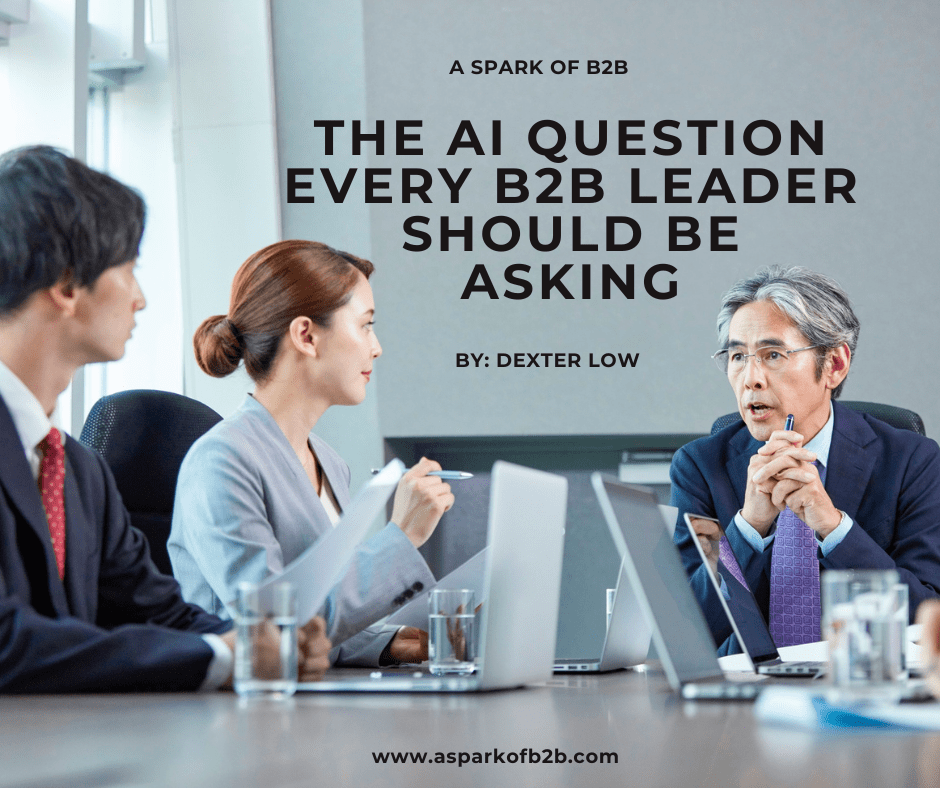
Artificial intelligence is a business imperative. Across industries, AI is quietly reshaping how B2B organizations operate, compete, and deliver value. The most forward-thinking leaders are no longer asking if they should integrate AI, but where it can make a measurable difference.
B2B decision-making has entered a new phase. Gone are the days when adopting AI was about signaling innovation. Today, it’s about sharpening operational intelligence, using AI as a strategic partner in growth, efficiency, and customer understanding. The challenge? Knowing where to focus amid all the noise.
The Real Question Behind the Hype
Every organization claims to be “AI-driven.” Yet, not all of them can answer a simple question: Why?
The conversation is shifting from adoption to alignment. Leaders are starting to realize that AI should be implemented in the service of clear business goals: improving lead conversion, accelerating sales cycles, reducing operational friction, or deepening customer insight.
The real question isn’t, “How fast can we adopt AI?” but “How can AI serve our strategy?” When B2B leaders frame AI decisions through that lens, they move beyond trend-chasing and into transformation that lasts.
Where B2B Leaders Are Finding Real Value with AI Development
The most successful AI initiatives are grounded in business relevance. Across the B2B landscape, several areas are showing proven returns:
- Marketing and Sales Optimization: AI tools can analyze vast amounts of buyer data to pinpoint the right accounts, tailor outreach, and predict churn. Personalized engagement is scalable.
- Customer Insights: Predictive analytics and sentiment analysis reveal patterns that help teams anticipate customer needs before they’re voiced.
- Operational Efficiency: From automated quoting systems to intelligent supply chain forecasting, AI simplifies complex workflows and reduces costly delays.
- Product Development and Support: AI-assisted R&D and chat-driven customer support are cutting time-to-market while improving client satisfaction.
In each case, value isn’t derived from AI itself, but from how effectively it strengthens decision-making and deepens customer relationships.
Common AI Missteps in B2B
For every success story, there’s a cautionary tale. Many B2B companies fall into predictable traps when rushing into AI initiatives:
- Data Silos: AI systems are only as good as the data they access. When information remains fragmented, AI insights are incomplete or misleading.
- Over-Automation: Handing too much over to machines without human context can lead to tone-deaf communication and damaged trust.
- Lack of Oversight: Without clear governance, AI outcomes can drift away from business goals or ethical standards.
- Unclear ROI: When success isn’t tied to measurable KPIs, leaders struggle to prove value or worse, to justify continued investment.
In short, enthusiasm without strategy leads to disillusionment. AI isn’t a one-time investment; it’s a continuous capability that demands clarity and leadership discipline.
The Leadership Imperative: Asking the Right AI Questions as a Boardroom Member
True AI leadership starts with better questions.
- What problem are we solving, and why does it matter?
- Do we have the right data foundation to support this initiative?
- How will we measure progress and accountability?
- Where should human oversight remain non-negotiable?
- How do we ensure ethical, transparent, and bias-free outcomes?
Asking these questions reframes AI from a technology decision to a leadership conversation. In the boardroom, curiosity becomes a competitive edge. The most successful B2B leaders aren’t those who rush to deploy the latest tools. They’re the ones who slow down long enough to understand their purpose.
The Bottom Line
AI will continue to evolve, but leadership principles won’t. The winners in this new era won’t be the companies that adopt the most AI tools, but those that adopt them wisely. The real test of leadership today is how well you question it. The right questions lead to smarter investments, stronger strategies, and a future where technology amplifies, not replaces, human intelligence. Because in the age of AI, leadership is about having the courage to ask the right questions.
You Might Also Like…
Master AI, But Stay Human: What B2B Marketers Need to Know About the AI Revolution
Transforming B2B Marketing: Where AI Meets Human Alignment
Why B2B Marketers Are Doubling Down on AI in 2025
Disclaimer note:
The opinions expressed in this post are those of the author. They do not purport to reflect the opinions or views of any company or their associates.
Follow me on my digital channels:
Website: https://asparkofb2b.com/
Facebook (A spark of B2B) https://www.facebook.com/profile.php?id=100089042254709
Twitter (aSparkofB2B) https://twitter.com/aSparkofB2B
LinkedIn (a-spark-of-b2b) https://www.linkedin.com/company/a-spark-of-b2b
Medium https://medium.com/@dexterwrites2022
#B2BMarketing #AILeadership #DigitalTransformation #FutureOfWork

