I have tackled the ‘Four Player Types’ in the Part I of ‘Series 2: What About USERS?’, and now I will discuss the ‘Gamification Mechanics Drive Users’ in Part II.
Part II: Gamification Mechanics Drive Users
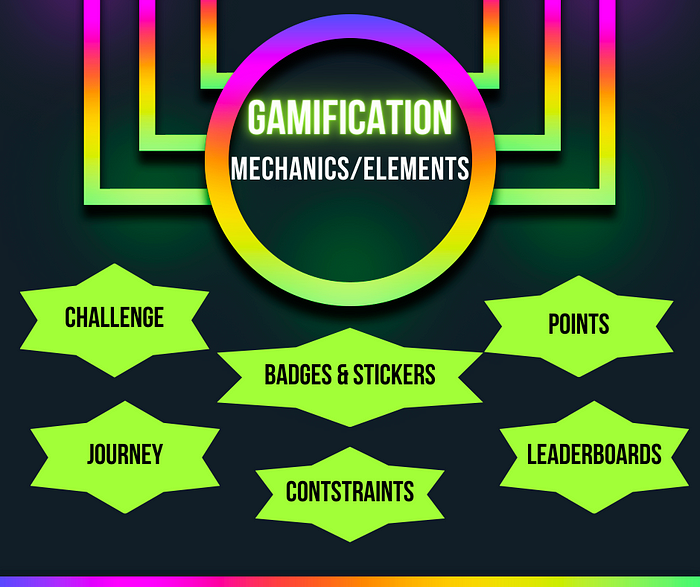
A well-thought game mechanic can be essential for B2B marketers to increase product user engagement and conversion rates. Game mechanics greatly motivate users, stirring curiosity and enticing people to finish the game in exchange for rewards or valuable information.
Here are some game mechanics that drive users:
Challenge
People, by nature, are driven by challenges. Every day we face life struggles at work, in the family, and in our community. Most of us bravely resolve and overcome them with hard work and confidence. For this reason, challenging game elements can motivate us to take action.
So, how can you include challenges in your game mechanics? Gamification mechanics usually start with the easy round, progressing to intermediate and difficult levels.
For example, you can start with basic product questions to test the B2B player’s awareness and then proceed to harder questions requiring comprehensive knowledge of your tech solution. As the question becomes harder, you can provide hints, like links to your helpful resources, to help the player get the right answer. At the same time, this strategy can help boost the player’s product knowledge, benefiting your business.
Tip — you can consider starting your first quiz questions with an alarming statistic that is backed up by research. Often this is one of the great hooks to garner attention.
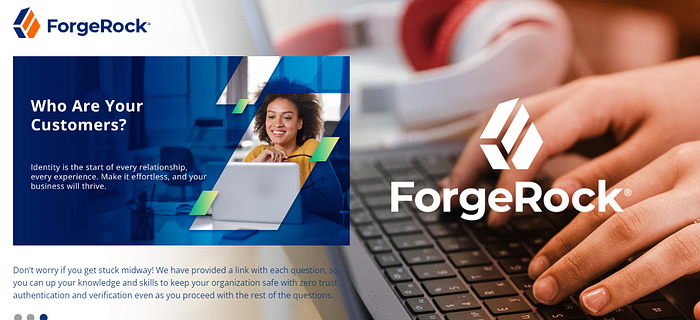
B2B marketers can enhance a game’s challenge effect by giving rewards or something in exchange to motivate players to finish each stage, regardless of the difficulty. Socializers, explorers, achievers, and killers love challenges.
Points
Points symbolize great achievement in gamification. That’s why achievers and killers love them. Many B2B games have a point system to measure the user’s success. Gamifying your product promotion benefits both users and your B2B brand. Users can track their achievements, whereas you can estimate user engagement.
Badges and Stickers
You can reward users with stickers or badges upon completing a challenge or garnering certain points. Socializers, achievers, and killers are proud when they earn stickers or badges. These virtual rewards are most common in video games. You can design them creatively to add personalization and make them social media shareable to drive motivation further.
Leaderboards
Challenging games become more interesting because of user competition. Achievers and killers desire to be the top players. That’s why I recommend listing the ranks in some gamification campaigns to drive users’ enthusiasm. But be cautious because listing names from the top ranking down to the lowest ranking player can also be demotivating for some people. So, apply this game element carefully, considering the type and nature of the game.
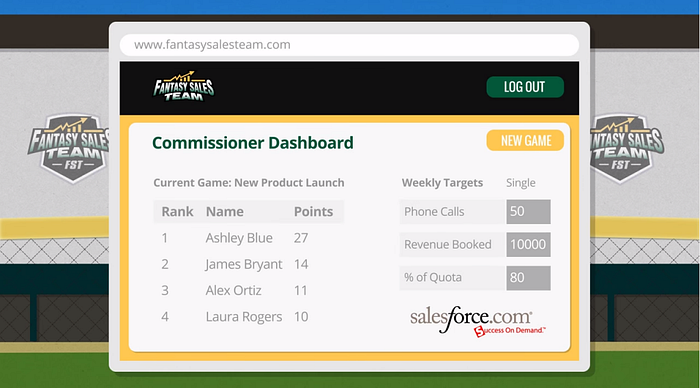
The screenshot below shows Microsoft’s recently acquired sales gamification platform, which they integrate into their customer relationship management (CRM) Microsoft Dynamics. The FantasySalesTeam’s gamification platform has a leaderboard that shows each user’s ranking and points earned. The goal is to motivate and incentivize sales teams to do their best to achieve better results.
Constraints
One of the most challenging game elements is time constraints. Socializers become overly excited with the adrenaline rush that constraints provide. On the other hand, killers want to show others they can beat them out in the shortest time. This game mechanic gives users a limited time to complete the tasks. The player loses when the time is finished without accomplishing the task required. Users react faster with the use of constraints, like a quiz timer, prompting them to act as fast as possible.
Journey
Socializers and explorers love this game mechanic. Journey aims to make the product interaction process as easy as possible. Users experience a personal journey of your product or service through fun, interactive games.
For instance, you can start the game with an introductory page explaining your B2B product or solution. As the user journey continues, you can progressively disclose the features and benefits through guided questions, hints, or multiple choices. This strategy helps avoid mistakes, making your product or solution easy to understand and use. Furthermore, you can supplement the journey element with a progress feature, like a game progress bar, to inspire users to continue.
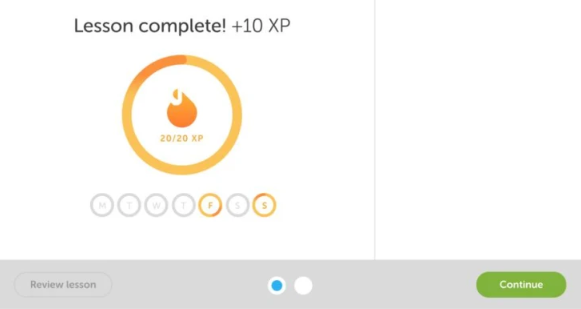
In the example below, a language-learning tool applies gaming concepts to language courses. Duolingo’s gamification allows users to start learning a language with basic sentence constructions. The screenshots below show two gaming concepts: the progress bar and the points system.
After each correct answer, the progress bar fills up, giving the user a visual representation of his current game standing or progress. The points system allows users to attain eXperience Points (XP) for every lesson they complete.

Remember that what motivates a specific target audience may not work on others. Each user or player is unique. I’m sure you have an idea of the needs and preferences of your target audience based on your niche and offerings. That’s when data analytics and market research come into play. Learn how you can quickly conduct market research in five minutes here!
Conclusion
Congratulations! You just gained a deeper understanding of users, the different types, and the game mechanics that drive them to continue and finish the game. Do reach out to me if you would like to discuss more on setting up your gamification campaign and the various design considerations associated with it.
Disclaimer note:
The opinions expressed in this post are those of the author. They do not purport to reflect the opinions or views of ThinkLogic Media Group or any company and their associates.
Stay in tune with ‘Series 3: Setting Up the Right “Win States” In Your Gamification Design’ to learn how B2B marketers can trigger Revenue Generating Behaviors by following me on my socials:
Facebook https://www.facebook.com/profile.php?id=100089042254709 (A spark of B2B)
Twitter page https://twitter.com/aSparkofB2B (aSparkofB2B)
Linkedin page https://www.linkedin.com/company/a-spark-of-b2b (a-spark-of-b2b)
#B2BGamification
#B2BMarketing
#B2BSales
#B2BLeadGeneration
#B2BContent Marketing

