
As I have shared in my previous articles here, gamification is a powerful tool for boosting engagement and brand awareness. Instead of relying solely on game-based content, I suggest a more holistic approach by increasing opportunities for customers and prospects to interact with your brand.
As a B2B marketer, tailoring your gamification strategy to your clients’ needs and goals is important. After carefully considering their lead targets and marketing objectives, you can create engaging gamification content and promote it through various channels, such as banner ads, social media pages, newsletters, and email marketing campaigns. Doing so can create a truly personalized and impactful experience for your customers.
Identify Pre-Defined Marketing Metrics In Your B2B Gamification Campaign
Based on my in-depth assessment and experience dealing with our long-time B2B clients, I propose the following pre-defined marketing KPIs for B2B gamification marketing campaigns.
1. Number of Game Participants
If you have a clear idea of the potential number of users participating in the game, you’ll also capture your potential end-of-campaign leads and being able to estimate the target number of converted leads from it.
The number of players in your B2B gamification campaign reflects the number of potential marketing-qualified leads for your business.
But how can you entice more prospects to join your brand-sponsored game? I would suggest implementing a holistic marketing approach for parallel mass outreach, such as a combination of email marketing, ad banner display marketing, social media marketing, and telemarketing. In that way, you can massively promote your gamified content using proven-effective B2B marketing tactics to attract more potential players or prospects.
2. Player Profile
I highly recommend determining your target audience’s player profile if you want a successful gamification campaign. This metric specifies whether the player is a new or returning user. I suppose you’ll agree that returning users would likely participate in the game.
You must also consider the demographics, like the city or country, of the players to gauge gamification interest based on similar origins, such as culture and time zone. I have seen many similarities in gamification behaviors among players in one geographical area. As you start implementing your gamification campaigns in your target location, you’ll definitely understand what I mean by this.

Image Powered by Canva: A Spark of B2B (Player Profile)
In B2B marketing, the potential players are key decision-makers in the company. I have worked with chief executive officers, IT directors, managers, and other upper-level company stakeholders for many years. And one thing I realized is that knowing their needs and valuing their time is essential in creating a successful B2B gamification campaign.
I also encourage B2B marketers to determine the company profile, such as the number of employees and the industry the company belongs to. These details can be an excellent basis for creating your promotions, game content, and tactics aligned with your target audience’s interests and needs.
For instance, you can create personalized email content for your target players in Thailand and another version for your prospects in Indonesia. You can insert a personalized greeting line in Thai or Chinese. Or send the email according to your audience’s preferred email opening hours based on their time zones, wherein cultural differences can influence this.
A BONUS TIP
The other suggestion is to consider adding major happenings in the localized media space to your game setup. It will give a sense of belonging that this campaign is designed with them in mind. You can find ideas on this by reading up on the latest news that happens in social space. And one tip I will share is to use Twitter and check out what is trending.
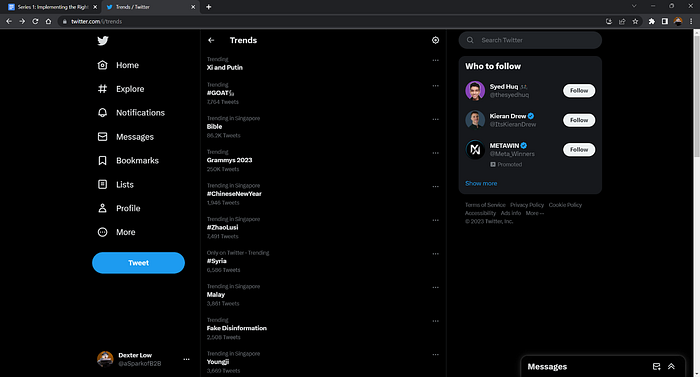
You can even set other locations to find out quickly!
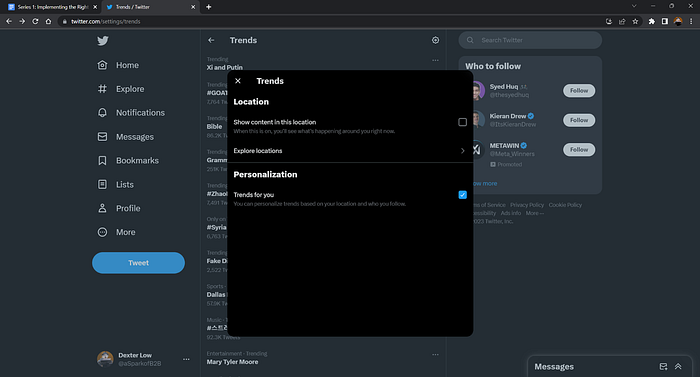
For example, let me set to Indonesia and see what comes up!
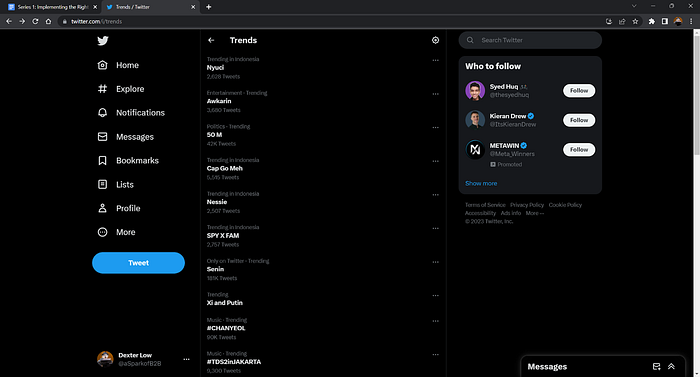
So my fellow readers from Indonesia, I am sure you will understand these local trending news terms better than I do, and let’s be creative with it for your gamification plan!
3. Device Profile
How do you want people to play the game? To create a more accessible and interactive gamification marketing campaign, it pays off to consider the device profile. This critical metric determines the operating system, browser, and device the player uses to access and complete the game. I am very particular about this metric because it shows me the referral source or potential game players.
The device profile of a B2B gamification marketing campaign may include the compatibility of the gamification platform across devices with different operating systems. Does the gamification web platform work well with Windows 10, iOS, and Android?

Image Powered by Canva: A Spark of B2B (Device Profile Sample)
The gamification platform must work on desktop and mobile views. Your game web development team can ensure this requirement is met. That way, nothing can hinder players from finishing the game.
As I always remind B2B marketers I work with, the gamification campaign’s device profile dictates the accessibility of the game to potential players. If the players can’t access the game or experience technical issues, the number of players decreases, and so does the number of potential leads.
In addition, it also allows the designer to consider a variety of potential tech stacks to excite the gamification process from this understanding, such as HTML 5 or other game engines. Therefore, the device profile is a relevant gamification metric.
4. Engagement Time Profile
Good timing is critical in gamification! I can say this statement in the loudest and most heartfelt way to capture your attention. To attain a successful gamification campaign, you must know when most people play the game, the average game completion time, and the length of time a player answers a question or completes a stage.
I suggest running a test for your gamification campaigns. For example, you can request some of your loyal clients to answer the quiz before launching it sitewide. Gamification testing is vital in gauging the success rate in completing the game. This metric answers the following questions:
- If the game is time-limited, how much time can you allot for each quiz question?
- Is the time limit enough, or must you adjust it to avoid player frustration?
- Are the questions too easy for the time allotment?
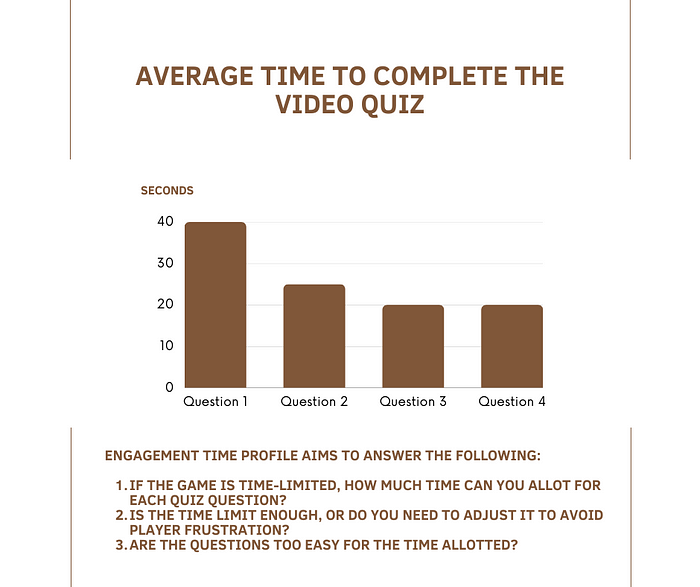
Image Powered by Canva: A Spark of B2B (Average Game Time Sample)
5. Game Mechanics
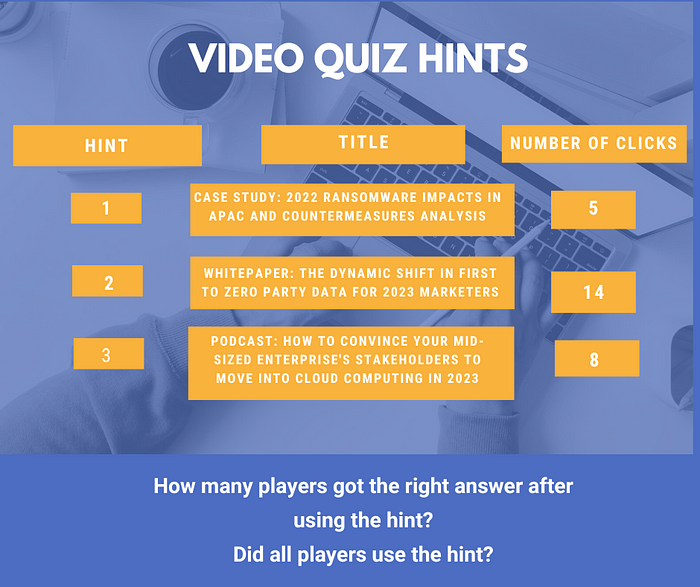
I propose giving ‘hints’ or cues to B2B gamification campaigns. A hint may contain a link to a client, giving the player valuable insights into the best possible answer based on factual information. This metric answers the following questions:
- How often does a player check the hint to answer the question?
- How many players got the right answer after using the hint?
- Did all players use the hint?
- How many incorrect answers were put in before getting the correct answer?
- Is there any stage the players took a long time to finish? Did it stop them from completing the game?
5. Email Capture Rate
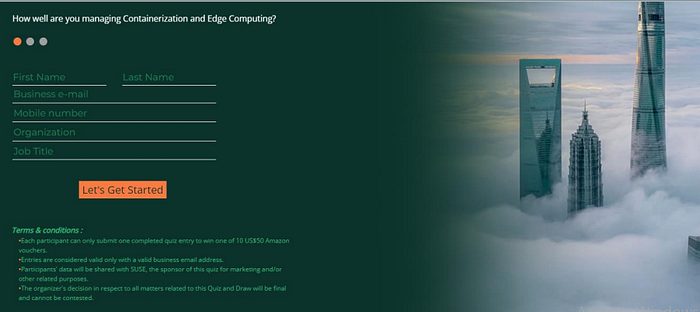
How do you capture a player’s data after the game? One tip I can give you is to have a signup page at the end of each B2B gamification page rather than at the start. Why? Because even if a player does not provide contact information, the intent data captured by your game engine can still produce tangible data for analysis.
As we head into the cookieless world, gamification aims to gather prospect data by encouraging players to proactively provide their email addresses in a more fun, interactive, relevant, and informative way.
Now onto your key questions, how do you want to entice players to sign up? Do you want to offer free downloadable content? Or do you want players to answer the online form for basic lead capturing simply? The beauty of gamification is that it is entirely in your control to dictate how the endgame works for your platform. The leads’ motivation to complete these desired actions is higher if they leave a deep impression on them and are part of this sunk cost fallacy process with their time.
Identify Performance Metrics In Your B2B Gamification Campaign
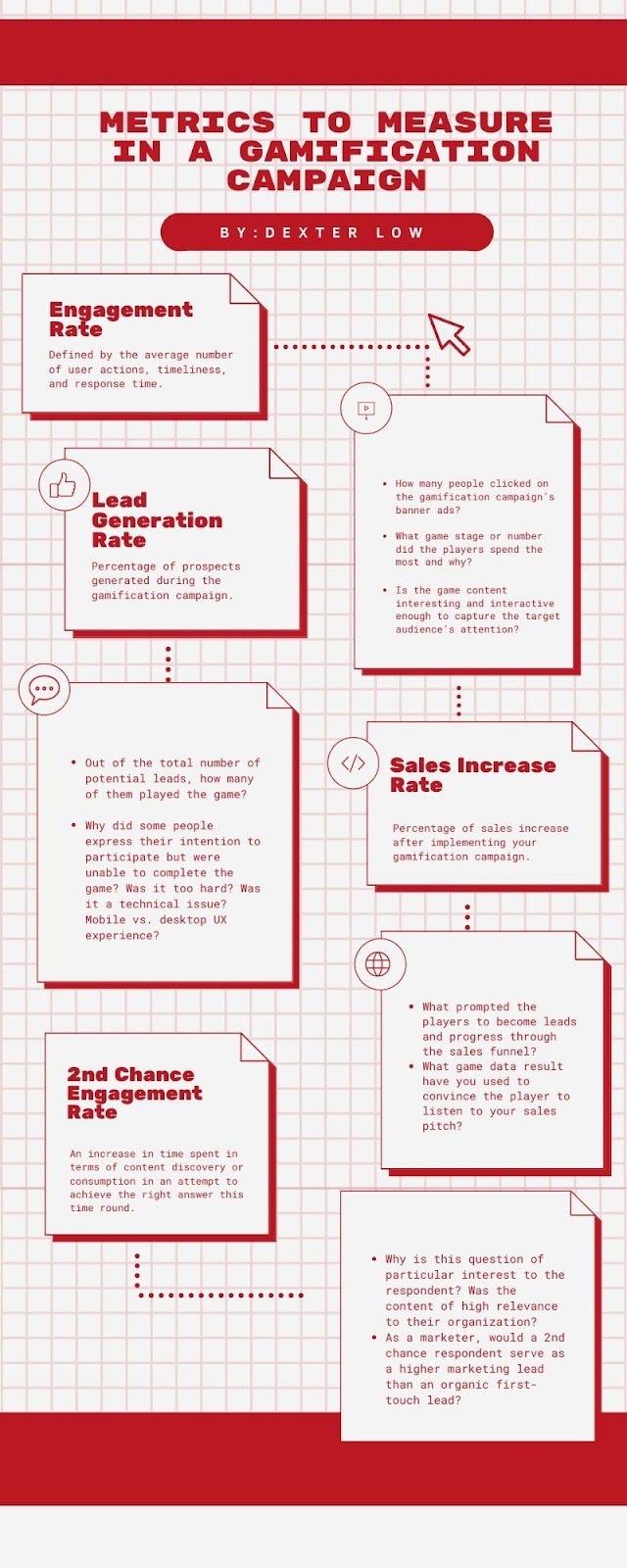
Check out this article I’ve written, which explains the key performance metrics to measure in B2B gamification campaigns.
Conclusion
As you can see, creating a gamification strategy workflow starts with knowing your target clients’ needs and goals. Once you fully understand these things, you can create your pre-defined marketing KPIs. For B2B clients, gamification metrics may differ from one company to another. But they also have obvious similarities, which you’ll obtain and realize from the data you’ll gather in your future gamification campaigns.
Disclaimer note:
The opinions expressed in this post are those of the author. They do not purport to reflect the opinions or views of ThinkLogic Media Group or any company and their associates.
Stay in tune with ‘Series 2: What About USERS?’ to learn how B2B marketers must categorize gamification players or users to attain the client’s marketing goals by following me on my socials:
Facebook https://www.facebook.com/profile.php?id=100089042254709 (A spark of B2B)
Twitter page https://twitter.com/aSparkofB2B (aSparkofB2B)
Linkedin page https://www.linkedin.com/company/a-spark-of-b2b (a-spark-of-b2b)
#B2BGamification
#B2BMarketing
#B2BSales
#B2BLeadGeneration
#B2BContent Marketing

